

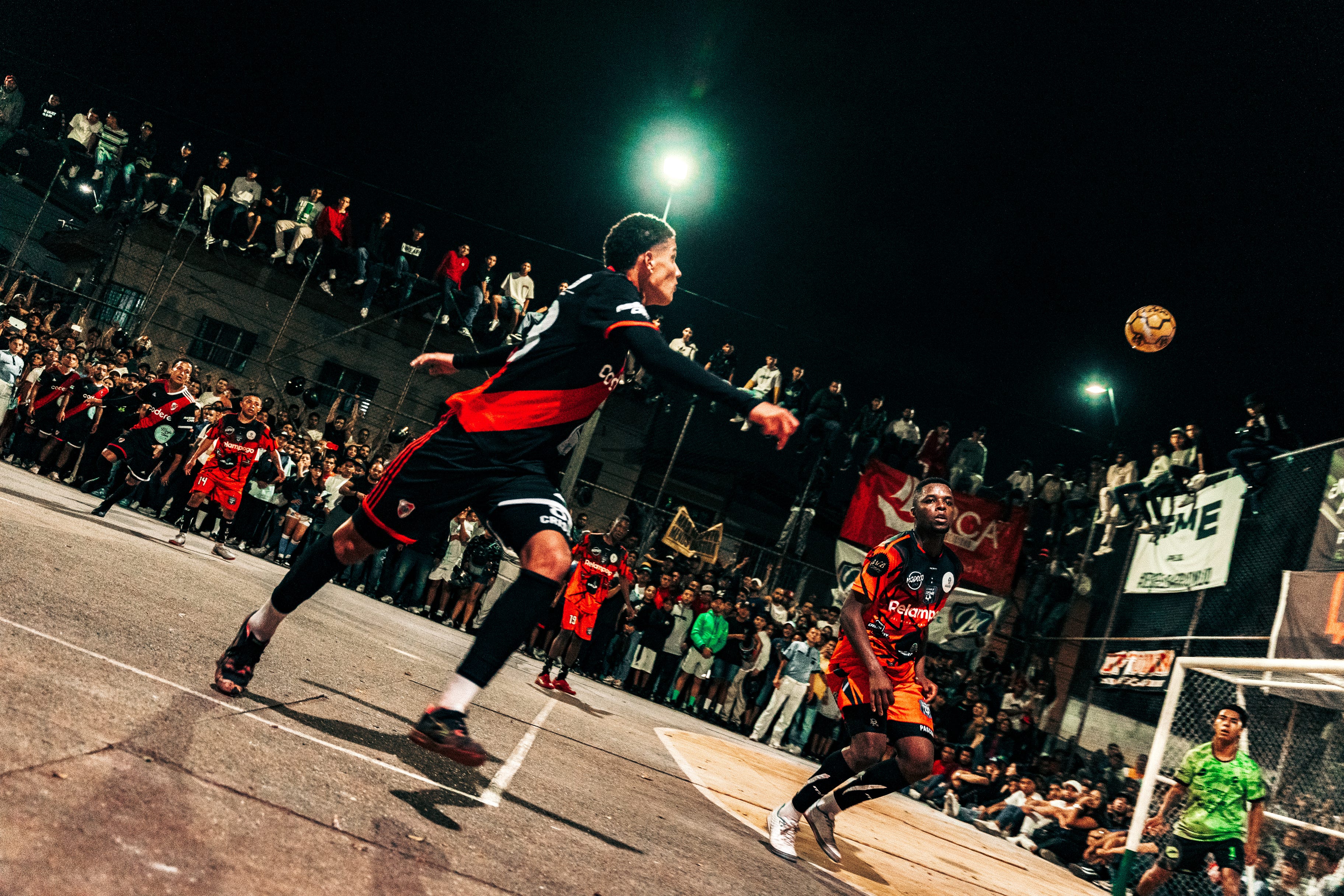
Football at the Torneo del Barrio in Medellín, Colombia. Photograph: Bryan Arroyave Zapata.
I first came across the Torneo del Barrio through a COPA90 documentary recommended to me on YouTube.
The tournament takes place in Medellín, Colombia, on a small concrete court surrounded by spectators. I hadn’t heard of it before, but I was interested in the football almost immediately.
There didn’t seem to be much room for anyone to do anything.
Players moved forward and backward, occupying spaces their teammates had left only seconds earlier. Possession changed quickly, and the shape of the game seemed to change with it.
I was particularly interested in what happened when a player moved forward. The space he’d occupied was suddenly available to someone else, whether a teammate or an opponent.
It reminded me of chess pieces shifting around a board, except everything was happening at once.
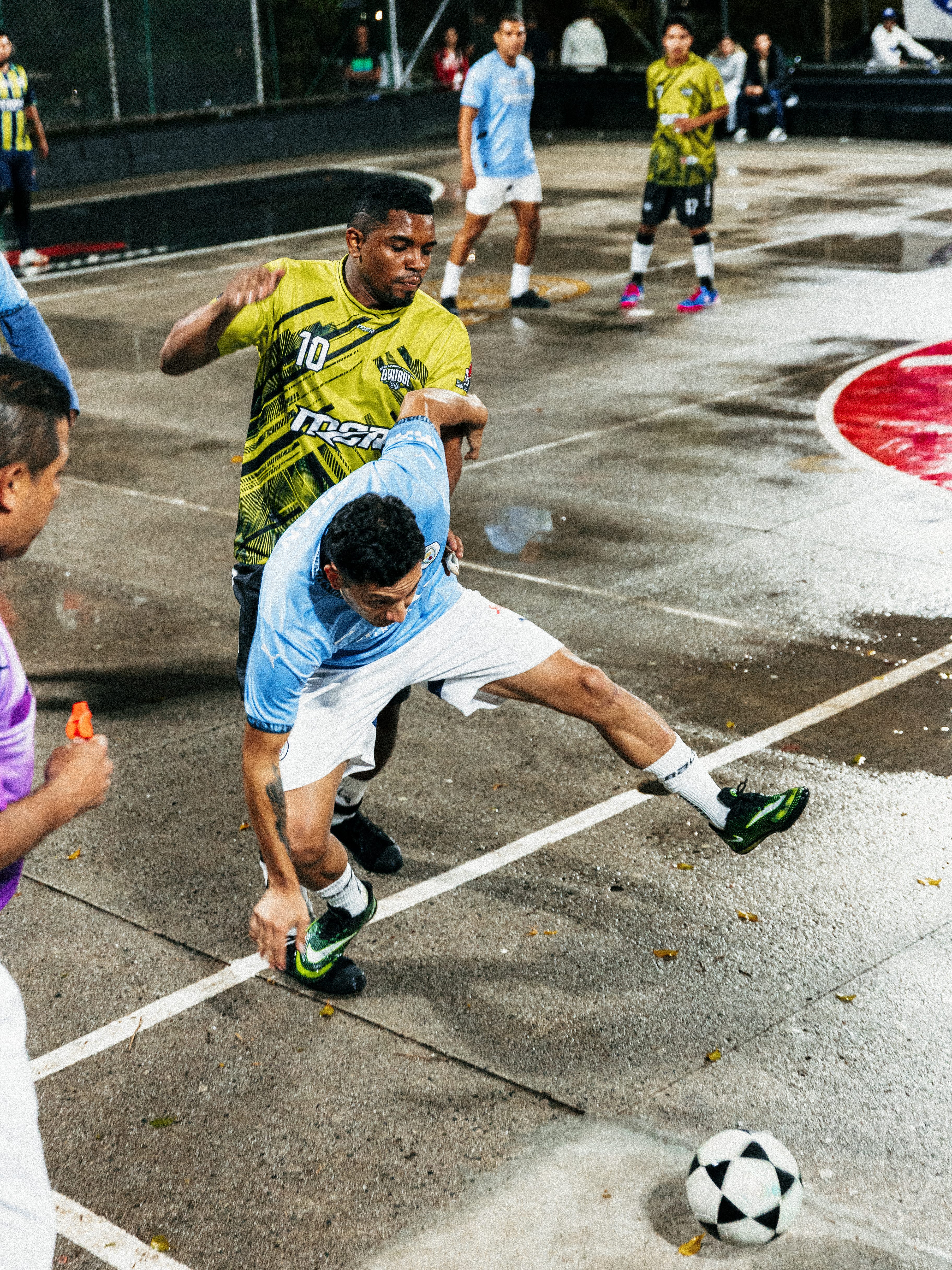
Players contest possession during the Torneo del Barrio. Photograph: Bryan Arroyave Zapata.
I wanted to know more about the tournament and eventually contacted Leonardo Weir, a player who had competed in several editions.
We spoke about his experiences, including matches that had stayed with him and how he believed the competition had developed over time.
Afterward, I went looking for more footage.
One recording featured Uptown La 24 against La 27.
I found myself watching the movement away from the ball almost as much as the player in possession.
The court was small enough that those movements seemed to matter almost immediately.
Spectators sat and stood close to the playing area, sometimes with very little separating them from the players.
I’d initially been interested in how the football worked in such limited space. Leonardo had experienced the tournament from inside it.
Leonardo Weir told me he had played in seven editions of the Torneo del Barrio over approximately four years, including the edition underway when we spoke.
During that time, he’d represented La Banda de la Cruz, La 24 FS, Dinama FS, and Mónaco FS.
Leonardo had seen the tournament change during his time playing there.
He recalled earlier editions that attracted relatively little attention. Few nationally recognized players participated during that period, according to his recollection.
He remembered more recognizable players becoming involved as the tournament developed.
He believed the competition had grown stronger and attracted considerably more attention, both within Colombia and internationally.
When I asked about matches that had stayed with him, Leonardo remembered two quarterfinal matches against Uptown La 24 during his first season with La Banda de la Cruz.
He described them as una locura.
Crazy.
The following season, he told me, he won the tournament.
But it was his description of the atmosphere that caught my attention.
Leonardo described the feeling of playing a neighborhood match in front of so many spectators as comparable to playing professional football anywhere in the world.
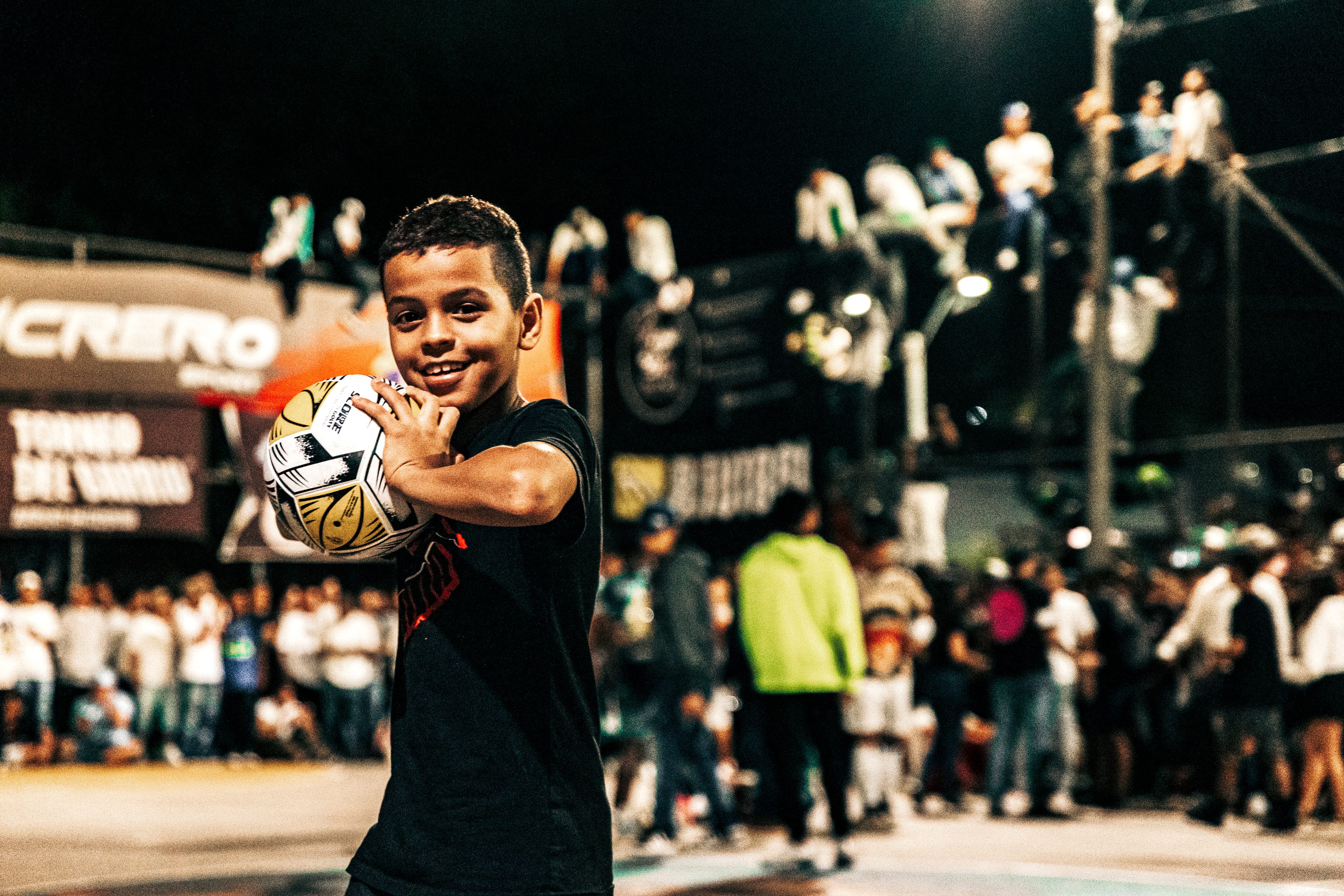
A player reacts during the Torneo del Barrio, with spectators gathered nearby. Photograph: Bryan Arroyave Zapata.
I’d spent a fair amount of time watching the players, but the spectators were difficult to ignore.
They stood along the boundaries, sat in chairs, and found whatever space offered a view of the football. In some of the recordings, there seemed to be very little separating the people watching from those playing.
I wanted to see more of that environment.
That’s how I came across Bryan Arroyave Zapata, a photographer who had spent time documenting the Torneo del Barrio.
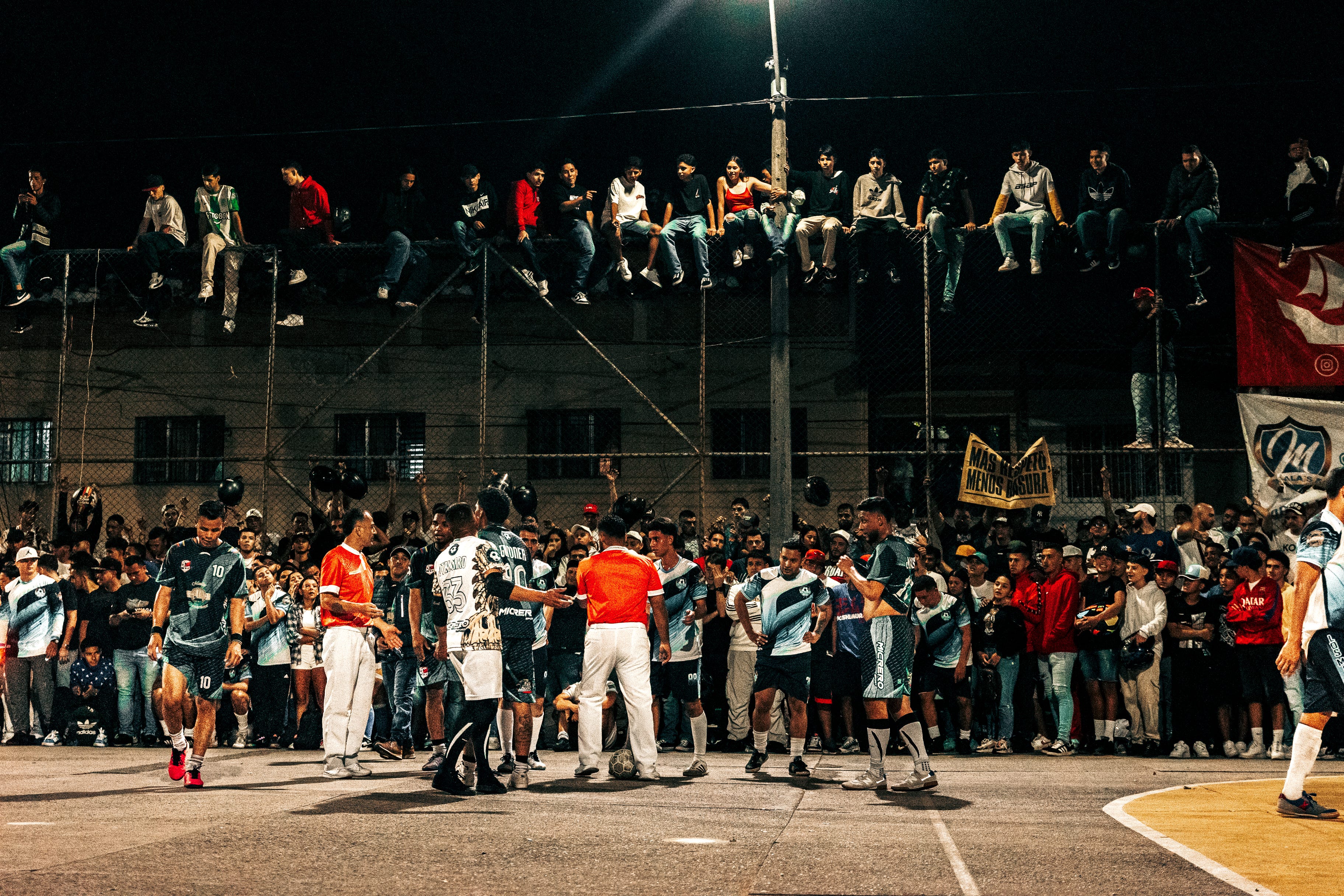
Spectators watch the Torneo del Barrio from around the playing area. Photograph: Bryan Arroyave Zapata.
I initially contacted Bryan about using his photographs for the article. As we talked, I became interested in what he’d experienced while taking them.
He described a crowded setting, with spectators, vendors, children, and adults gathering around the matches. Some people climbed fences to get a better view.
Photographing the tournament meant working close to the action.
Bryan recalled one occasion when a ball struck him directly in the face.
His photographs captured different parts of the tournament. Some showed players challenging for possession on the concrete, with spectators standing just beyond the court. Others focused on the people watching.
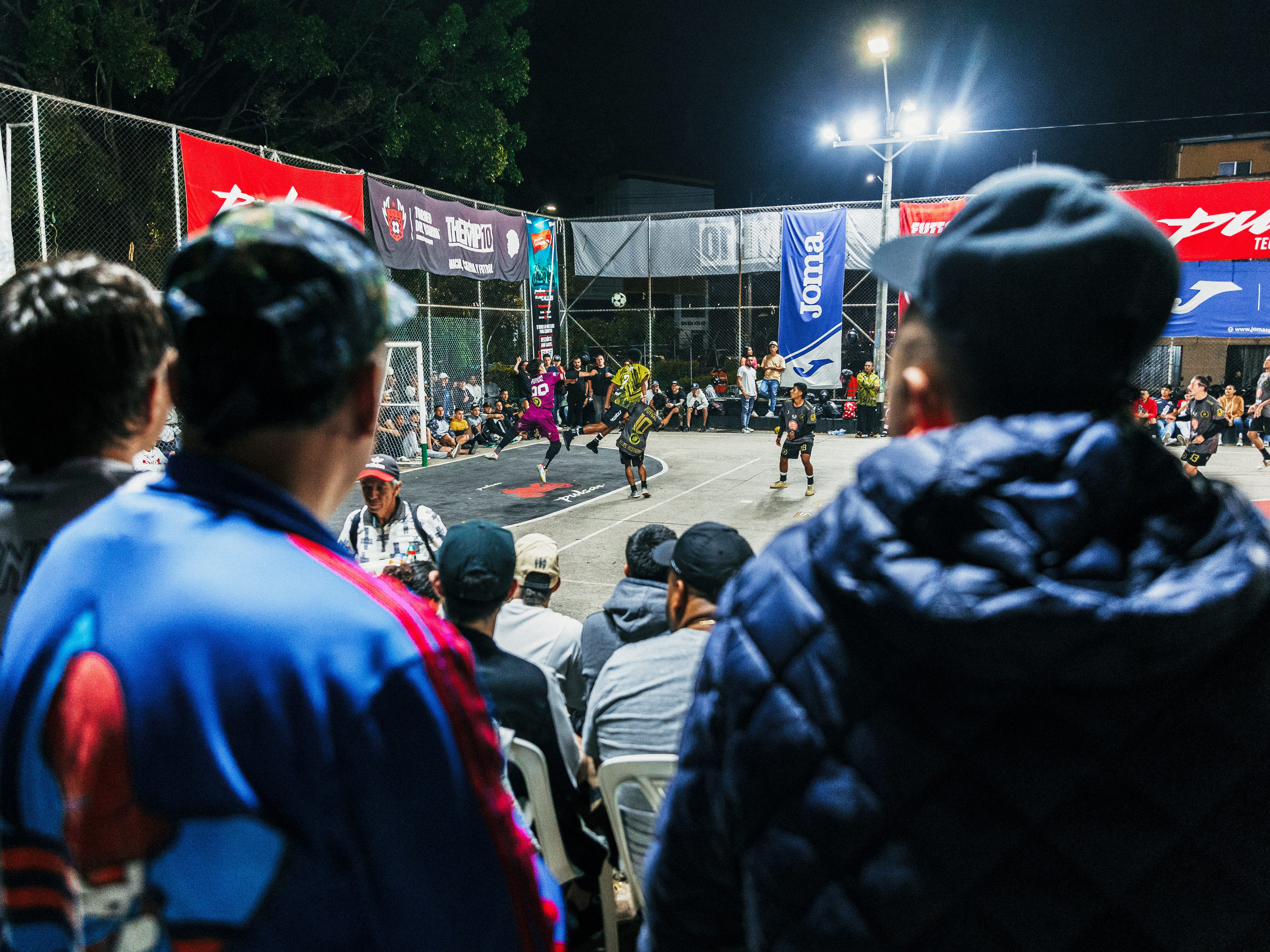
Spectators watch the football from beside the court. Photograph: Bryan Arroyave Zapata.
The Torneo del Barrio is played in Barrio Antioquia, a neighborhood in Medellín. Establishing exactly when the competition began, however, has been more difficult than I expected.
FUTTO, which broadcasts the tournament, lists its history as beginning in 2018. In a 2024 interview with Hinchas Colombia, one of the tournament’s organizers identified 2020 as its starting year.
Leonardo also remembered editions taking place during the tournament’s earlier years.
Those accounts don’t quite agree. I couldn’t establish from the available reporting why the dates differ.
By April 2023, El Colombiano was reporting on the tournament and its growing popularity.
In that reporting, the tournament’s organizer described initially arranging a children’s competition, followed eight days later by an adult tournament involving 14 teams.
Matches were played five against five on a concrete court, with two 20-minute halves. Some evenings featured four to six matches.
The competition had also attracted sponsors and prize money.
Santiago Rodríguez, who became involved in broadcasting the tournament, recalled encountering an established crowd when he first visited. He described the atmosphere around the matches before proposing that they be streamed, in an interview with Athleta Magazine.
The spectators were already there.
In April 2023, El Colombiano reported approximately 140,000 live views across 46 broadcasts, according to figures provided by Rodríguez.
Those were reported viewing figures, not independently audited audience data. The 140,000 views should not be confused with 140,000 individual viewers.
The broadcasts made the matches accessible to people who weren’t standing beside the court.
How much that contributed to the tournament’s subsequent growth is harder to establish. Leonardo remembered stronger competition and greater visibility, but his recollections alone cannot tell us what caused those changes.
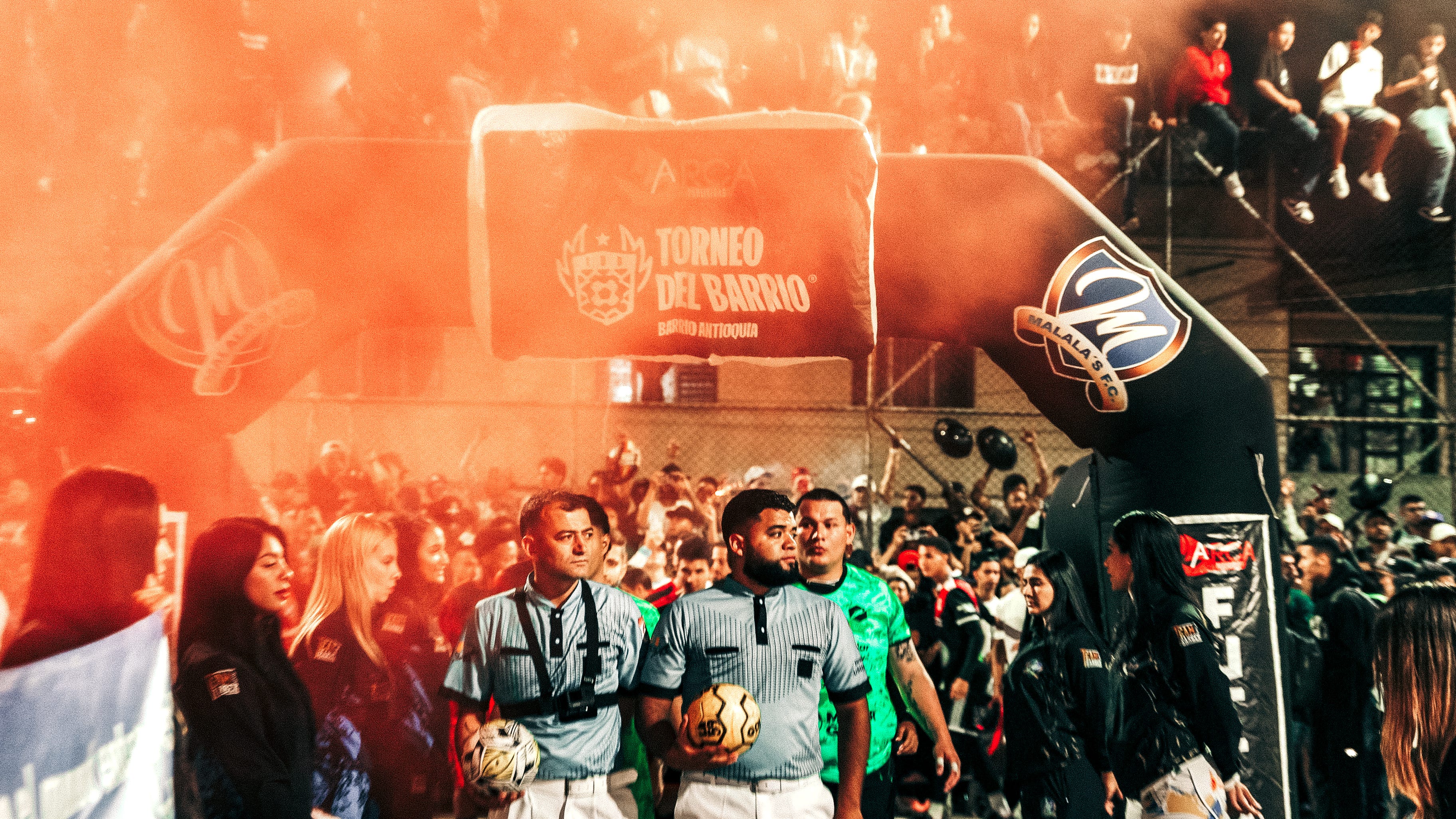
Players and spectators amid orange smoke at the Torneo del Barrio. Photograph: Bryan Arroyave Zapata.
I started looking into the Torneo del Barrio because I was interested in the football.
There didn’t seem to be much space, yet players were constantly finding somewhere to move. I wanted to understand more about what I was watching.
Speaking with Leonardo and Bryan helped, although perhaps not in the way I’d initially expected.
Leonardo described the feeling of playing a neighborhood match in front of a crowd that made it feel like something much bigger. Bryan described working beside that same court, surrounded by the people who came to watch.
Neither conversation explained precisely why the football looked the way it did.
I still don’t know whether the playing conditions produce a distinctive style, or how much the tournament’s growing visibility has changed the competition.
And I haven’t been there myself.
But I understand a little more about what happens around the football, even if I still have questions about what happens on the court.
I’d like to see both in person.
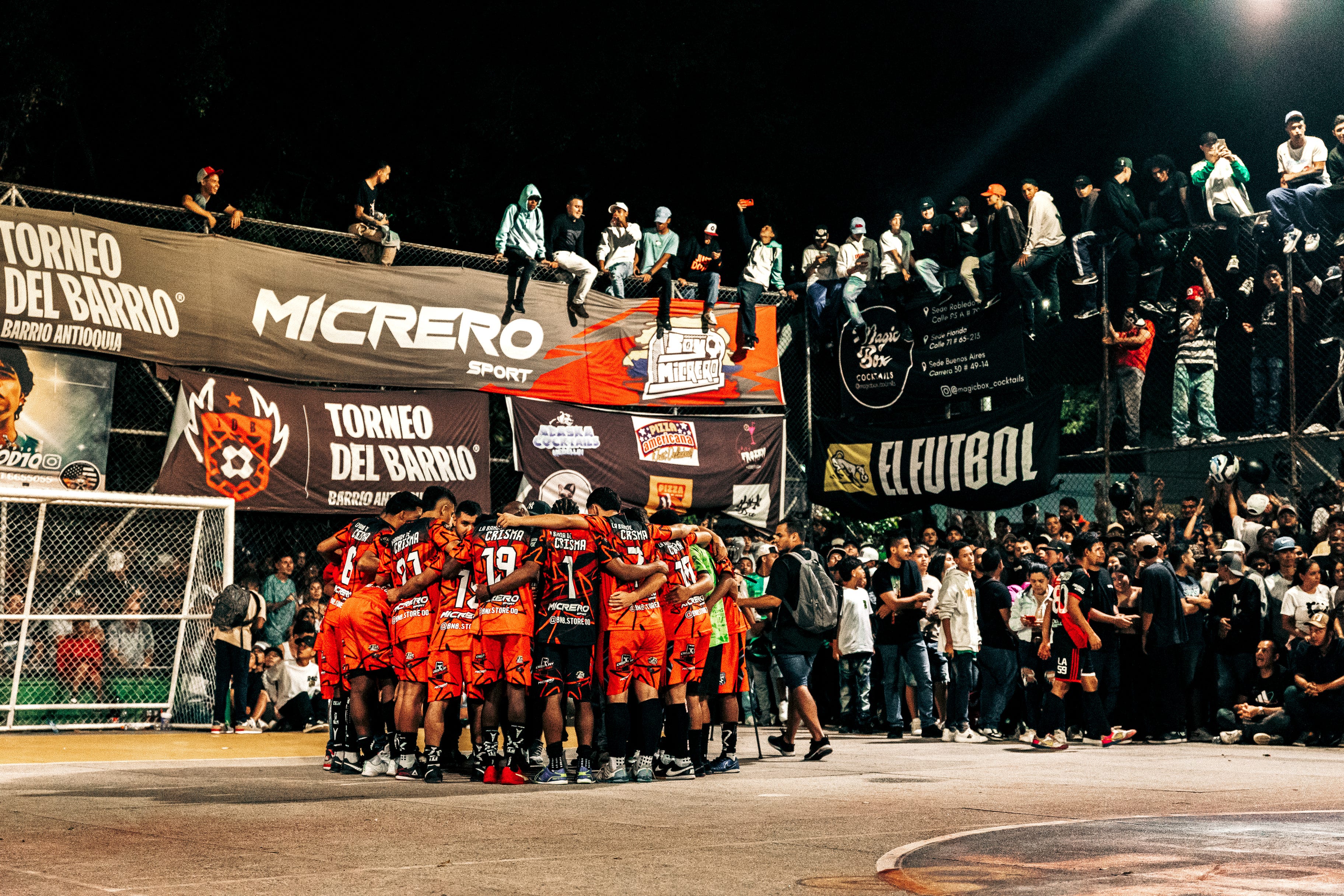
Players gather on the court during the Torneo del Barrio in Medellín. Photograph: Bryan Arroyave Zapata.
Research & References
This article began with a COPA90 documentary about Medellín’s Torneo del Barrio. I later watched additional match footage, including a recording of Uptown La 24 against La 27.
The reporting also includes conversations with Leonardo Weir, who described his experiences playing in the tournament, and Bryan Arroyave Zapata, whose photographs and firsthand observations helped me understand the environment surrounding the court. Those conversations took place in Spanish through private correspondence and audio messages.
Historical information about the competition comes from FUTTO, Hinchas Colombia, and El Colombiano. Santiago Rodríguez’s account of the tournament’s broadcasting development comes from an interview published by Athleta Magazine.
The sources do not agree on when the tournament began. The article preserves that discrepancy rather than selecting a date the available reporting cannot establish.
The reported broadcasting figures are historical figures attributed to Rodríguez, not independently verified audience measurements. Leonardo’s observations about the tournament’s development are presented as his experiences rather than objective measurements of playing standards.
My observations about movement and space come from watching recordings. They do not establish that the court’s dimensions produce a distinctive playing style, or that broadcasting caused the tournament’s growth.
The photographs accompanying this article are by Bryan Arroyave Zapata and are reproduced under license.